
Accurate Records Without the Argument
Paper registers and spreadsheets depend on memory and goodwill. Times get rounded, entries are filled in at the end of the week, and handwriting has to be interpreted. None of this is necessarily dishonest, but it means the record is approximate, and approximate records cause disputes.
An electronic attendance system records the actual time of each punch, against the actual person, automatically. With biometric identification, the punch can only be made by the employee themselves, which removes the problem of one person signing in for another. The result is a record that both the company and the employee can rely on, because neither of them wrote it.
Fairness Employees Can See
Staff notice when rules are applied unevenly. If one supervisor overlooks lateness and another reports every minute, or if overtime is recognised in one department and ignored in another, resentment builds quickly. An attendance system applies the same shift times, the same grace period and the same overtime rules to everyone.
This protects employees as much as the employer. Someone who regularly stays late has evidence of it. Someone accused of poor timekeeping can see the record and challenge it if it is wrong. Punctual employees are no longer quietly covering for colleagues who are not. When the rules are published and the data is visible, conversations about attendance become factual rather than personal.
Payroll That Starts From Clean Data
Payroll is only as good as the attendance figures fed into it. When those figures are compiled by hand from several registers, errors are inevitable: a missed absence here, a miscounted overtime hour there. Each one has to be found, discussed and corrected, often after salaries have already been paid.
With an attendance system, the pay period ends with a calculated summary for each employee: days present, absences, late minutes and overtime hours, worked out by the same rules every month. That summary can be exported for payroll rather than retyped. HR still reviews the exceptions, but the bulk of the work is done, and the figures can be traced back to individual punches if anyone questions them. Where your HR or payroll software supports it, export or integration can be set up as part of attendance system installation.
Visibility Across Branches and Sites
For a single office, the owner can usually see who is in. That stops being true the moment there is a second branch, a warehouse, a shop or a project site. Managers then depend on phone calls and on reports sent by each location in its own format and in its own time.
A centralised attendance system connects the devices at every location to one database. Head office can see today's attendance at each site, compare patterns between branches and produce a single consolidated report. Employees who move between locations can be enrolled once and recognised wherever they are authorised to work. This is the main reason growing companies move to a managed attendance system across their UAE branches rather than buying standalone devices one at a time.
Records You Can Find When Questions Come Up
Questions about working time rarely arrive straight away. A disagreement about final settlement, a query over leave balance, or a review of overtime may come months later. Finding the relevant page in a box of old registers is slow and sometimes impossible.
Attendance software keeps a searchable history per employee. Provided the database is backed up and retained in line with your policies and UAE labour requirements, you can produce a clear record for any period in minutes. Good record keeping of this kind also supports internal audits and makes handovers easier when HR staff change.
Less Admin for HR and Supervisors
Much of the saving is in tasks that simply disappear:
- Nobody collects, checks and files paper sheets from each department.
- Nobody retypes hours into a spreadsheet and then into payroll.
- Supervisors stop spending time confirming who was in on a given day.
- Late and absence reports are generated on demand instead of compiled by hand.
- Leave, holidays and shift changes are recorded in one place rather than in scattered emails.
The time recovered is better spent on the exceptions that need human judgement, and on the parts of HR work that no machine can do.
Getting the Benefits in Practice
None of these benefits come from the device alone. They come from a system that is properly chosen, installed and explained. Three things make the difference.
Choose devices that suit the workplace
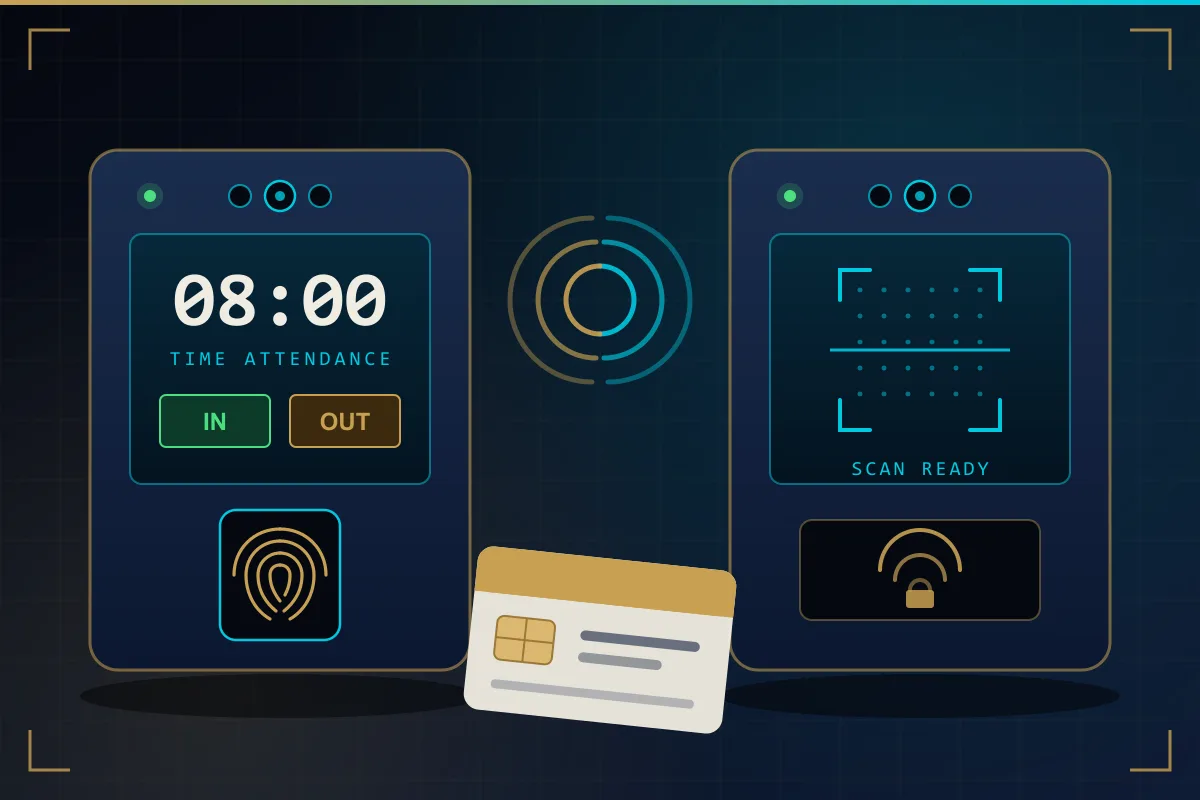
Fingerprint readers suit most offices; contactless face terminals are often better for dusty, gloved or hygiene-sensitive work. The range of biometric devices is wide, and a device that is wrong for the environment produces rejections, queues and manual corrections that undo the benefits. Card-based punch-in and punch-out machines remain a good option for visitors and contractors.
Configure the rules before going live
Shifts, grace periods, weekends, holidays and overtime rules should reflect how the company really works. Reports built on default settings will be wrong, and people will stop trusting them.
Explain it to employees
Tell staff what is recorded, how biometric data is stored, who can see the reports and how to raise a correction. A system introduced openly is accepted far more readily than one that appears on the wall without explanation.