VOWTECH supplies, installs and configures rack-mounted servers for organisations that run their systems from a server room or data centre. We size each server to its workload, mount and cable it properly in the rack, and hand it over with storage, operating system and remote management ready.
A rack server is a flat, standard-width machine designed to slide into a cabinet alongside others. The format packs a lot of computing into little floor space, keeps cabling and airflow orderly and lets an engineer pull one server out on rails for service without disturbing its neighbours. It is the usual choice once an organisation has a proper server room.
Rack servers are built for continuous duty. Most offer redundant power supplies, hot-swap drives and an out-of-band management port that lets an administrator power-cycle or reinstall the machine remotely. Those features only help if they are set up, so VOWTECH configures them as part of delivery rather than leaving them at factory defaults.
If your office has no cabinet or server room, a tower server is often the more sensible option. Where a rack is needed as well, we supply and fit server racks and cabinets in the same project. For help deciding the overall approach, see server solutions.
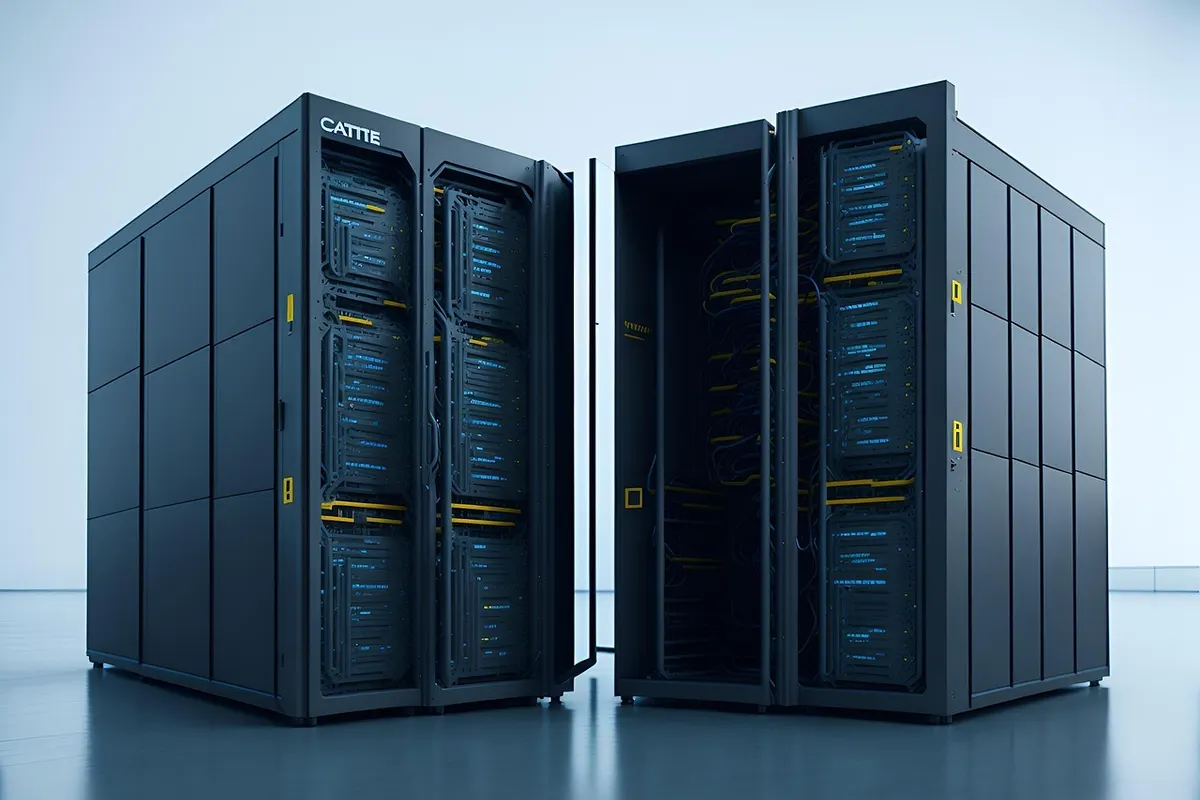
The role decides the specification. These are the three jobs we size rack servers for most often.
One or more hosts running many virtual machines. Memory and processor cores matter most here, along with fast, shared or replicated storage.
ERP, accounting, line-of-business and database workloads that need consistent disk performance and predictable response for many users at once.
Chassis with many drive bays, used as file servers, backup repositories or video recording servers where capacity matters more than raw compute.
From the specification sheet to a server that is racked, labelled, configured and documented.
Processor, memory, drive layout and network ports are specified from your actual workloads and software requirements, with sensible room for growth.
Servers are supplied with the agreed components, then assembled, firmware-updated and burn-in tested before they are brought to your site.
Servers are fitted on sliding rails with cable management arms, dual power feeds to separate sources and network connections that are neatly run and labelled.
Drive arrays are built at the RAID level that suits the role, with hot spares where appropriate and alerts configured for drive failure.
Windows Server, Linux or a hypervisor is installed, patched and joined to your environment, with roles and virtual machines set up as agreed.
The out-of-band management controller is given a secured address and credentials, so the server can be reached even when the operating system is down.
Most of the work happens before the server reaches your rack, which keeps time on site short.
We look at the applications, user numbers, data volumes and the rack, power and cooling available.
You receive a clear specification and quotation explaining what each component is there for.
Hardware is assembled, updated and tested, and base configuration is completed off site.
The server is railed, powered from two sources, cabled to the network and labelled.
Failover, alerts and remote management are tested, then documentation is handed over.
Rack servers cost more to house than a tower, so the case for them rests on density, resilience and serviceability.
Several servers, storage and networking share one cabinet footprint instead of spreading across a room.
Redundant power supplies, fans and hot-swap drives let common failures be handled without a shutdown.
Out-of-band management allows diagnosis and recovery without someone standing in the server room.
Additional hosts, storage shelves or switches are added to the same rack as requirements increase.
Standalone servers for offices without a server room or rack.
Learn moreHigh-density blade chassis for larger consolidated environments.
Learn moreWall-mount and floor-standing cabinets to house servers and network equipment.
Learn moreConsulting, supply and deployment across on-premises, virtual and hybrid servers.
Learn morePatching, monitoring and administration of servers after they go live.
Learn moreAnnual maintenance covering servers, network and end-user IT.
Learn moreTell us what the server will run and what is already in your rack. We will recommend a specification and handle supply, installation and configuration.