When one server can no longer carry an application alone, or the business cannot afford for it to stop, a load balancer shares the work across several. VOWTECH designs, deploys and supports load balancing for web applications, portals and internal systems for organisations in Abu Dhabi, Dubai and across the UAE.
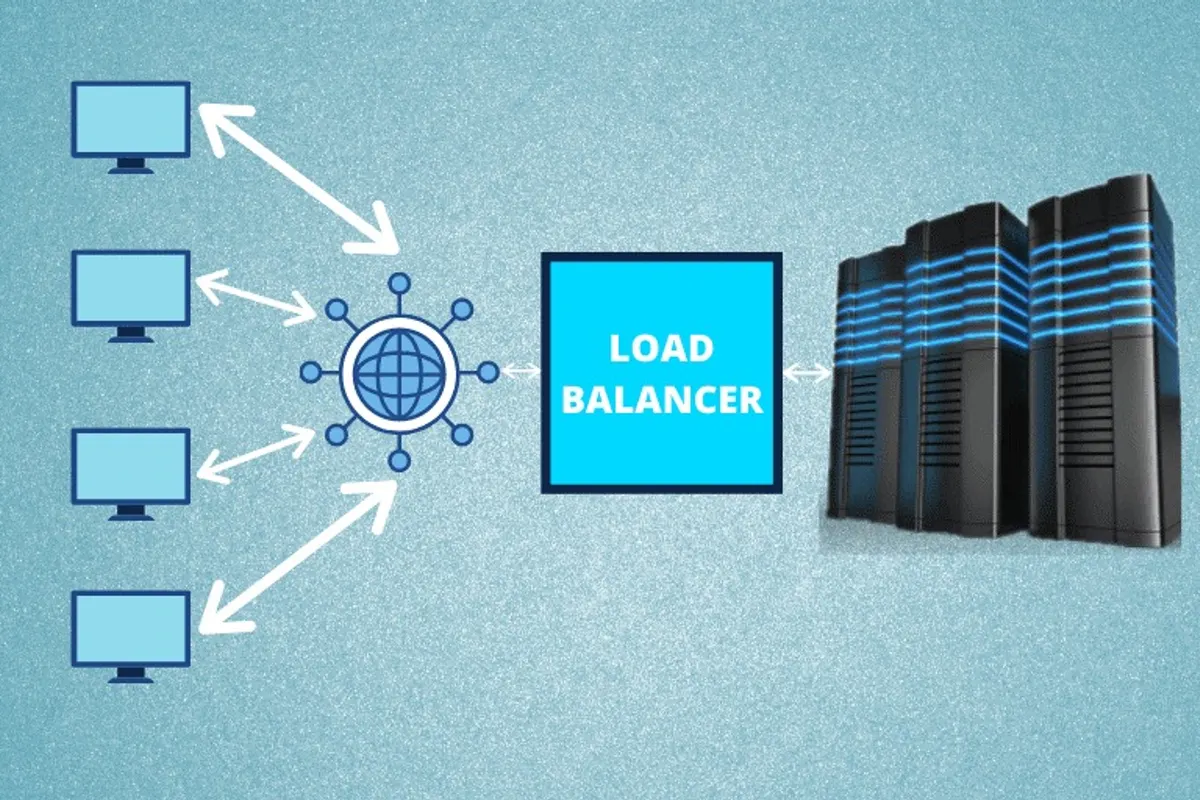
A load balancer sits in front of a group of servers running the same application. Users connect to a single address; the load balancer passes each request to a server that is healthy and not overloaded. If a server fails or is taken down for maintenance, requests simply go to the others.
That solves two separate problems. The first is capacity: an application that struggles at peak times can be scaled by adding servers instead of replacing one with an ever larger machine. The second is availability: patching, restarts and hardware faults no longer mean the application is offline, because no single server is essential.
Load balancing only works if the layers beneath it are sound. VOWTECH plans it together with the server platform, virtualization and network design, and places a web application firewall alongside it where applications face the internet.
Organisations usually come to load balancing for one of these reasons and gain the other two along the way.
Requests are spread across servers using a method suited to the application: simple rotation, fewest active connections, or weighting towards more powerful machines. No server is swamped while another sits idle.
The load balancer tests each server continuously and stops sending traffic to any that fails. Deployed as a redundant pair, the load balancer itself is no longer a single point of failure either.
Work that burdens application servers, such as encryption, compression and connection handling, can be moved to the load balancer, freeing the servers to do what they are for.
Hardware appliance, virtual appliance or cloud service: the form changes, the design questions stay the same.
We configure virtual services, server pools and distribution methods for web applications, portals, remote desktop farms and internal line-of-business systems.
Checks are written to test that the application really answers, not merely that the server responds to a ping, so failures are caught accurately.
Encryption is terminated on the load balancer, certificates are managed in one place and older insecure protocols are disabled consistently.
For applications that keep a user session on one server, persistence rules keep each user on the same server for the life of their session.
Outbound traffic can be shared across two or more internet connections, with automatic failover if one provider has an outage.
Where an application runs in more than one location or partly in the cloud, users are directed to the site that is available and closest.
The application is usually already in use, so the deployment is staged and reversible.
We establish how the application handles sessions, encryption and logins, with its vendor if required.
Network placement, server pools, health checks and redundancy are set out in a short design.
The load balancer is installed and configured alongside the live service without disturbing it.
Servers are deliberately taken out of service to prove that users are not affected.
Traffic is moved to the new address at an agreed time and the setup is documented.
Not every organisation does. These are the situations where it earns its place.
An application that is fine for most of the day but struggles at month-end, shift change or campaign launches.
Customer portals, booking systems and internal tools whose outage stops revenue or operations.
Servers can be patched one at a time during the working day while the others carry the load.
Traffic can be redirected to a secondary site when the primary site is unavailable.
Server platforms sized and built for the applications you run.
Learn moreProtection for internet-facing applications, often deployed with load balancing.
Learn moreRun several application servers on shared, resilient hardware.
Learn moreInfrastructure for organisations hosting their own critical systems.
Learn moreDual-WAN routing and internet failover for offices and branches.
Learn moreNetwork design and delivery for companies across the Emirates.
Learn moreTell us what the application is, where it runs and when it struggles. We will advise whether load balancing is the right answer and how to deploy it safely.